
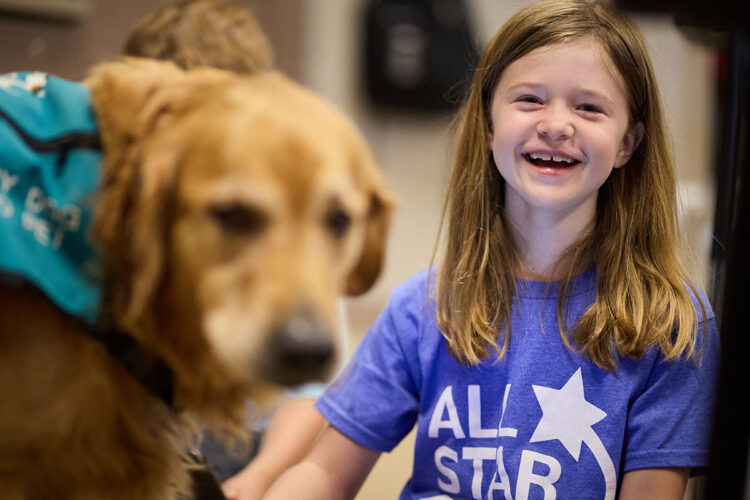
On Tuesday and Thursday mornings, Kirby knows exactly where he is going.
The six-year-old golden retriever arrives at school with his owner, third-grade teacher Lauren Allen, his tail wagging and his enthusiasm fully charged. He pulls toward the doors, ready to greet students, visit old friends and begin another important day of listening, comforting and accepting scratches behind the ears.
Kirby is starting his third year at Heritage Elementary in the Bennington school district where Allen teaches. She said the idea came out of conversation about therapy dogs at lunch one day.
“I thought, ‘Oh my gosh, Kirby would be so good at that,’” she remembers. “Ever since he was a puppy, he’s been so mild tempered. He’s such a good listener, and he wants to be best friends with everyone he meets.”
The more Allen thought about it, the more she wondered what it would be like to have him certified to be in her classroom. His journey to their home set the stage toward confirming he would be perfect.
When she and husband, Austin, were looking for a Golden Retriever, it was during the COVID-19 pandemic. A breeder in Centerville, Missouri, had one male puppy left in a litter —the little fellow wearing the green collar. The breeder asked for a contactless pick up and said they would find him in a pen in the yard. After their five-hour drive, they arrived to see a goat in the front yard.
“We thought, ‘Hopefully, we didn’t just buy a goat,’” Allen said, laughing.
Fortunately, the transaction did produce a dog, and he was named Kirby. Soon after, the Allens welcomed baby Tatum, who is Kirby’s bestie at home, and the one who showed them that his temperament was just right to be around children.
Allen did her due diligence researching what it would take to have Kirby certified as a therapy dog, then made her case to principal Katie Woodrich. “I was beyond excited when Allen first brought the idea to me,” Woodrich said. “I had personally experienced the benefits of having a therapy dog in my classroom when I was a teacher and knew firsthand the positive impact a therapy dog can have on students and staff. I couldn’t wait for our Heritage community to have the opportunity to experience those same benefits.”
With the green light, Allen trained Kirby for the job through Pups With a Purpose and got him certified through the Alliance of Therapy Dogs. When asked what the difference is between a therapy dog and a service dog, she explains it like this: “A service dog is working, so I tell my students to not pet a service dog or talk to it, and to basically ignore it so that it can do its job. A therapy dog, like Kirby, is a volunteer. He’s volunteering to be here with us and make us feel happy.”
Kirby volunteers on Tuesdays and Thursdays from 8 am to 4 pm. He’s allowed to come in three days a week, but Allen gives him a break. “He’s pretty exhausted at the end of his days,” she said.
At school, Kirby has a bed at the front of Allen’s classroom and another favorite spot on the cool tile. During independent work time, students may sit beside him to read or complete assignments. After specials, the students gather in a circle on the floor with Allen and Kirby. They eat a snack and pet Kirby while Allen reads aloud from a chapter book. “It’s a good chill down time,” noted Allen.
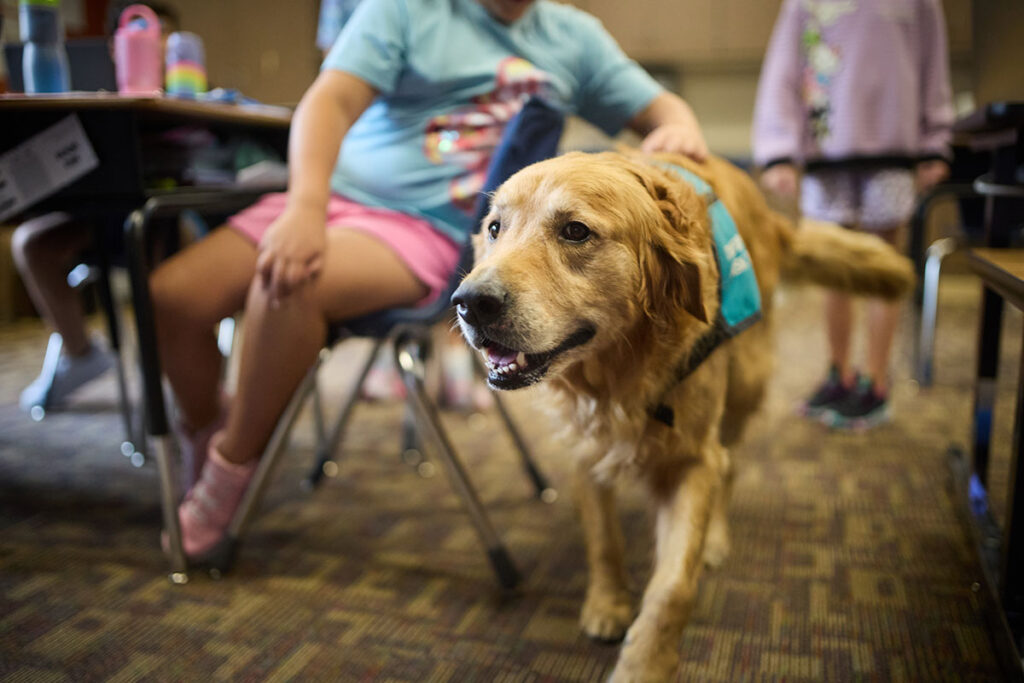
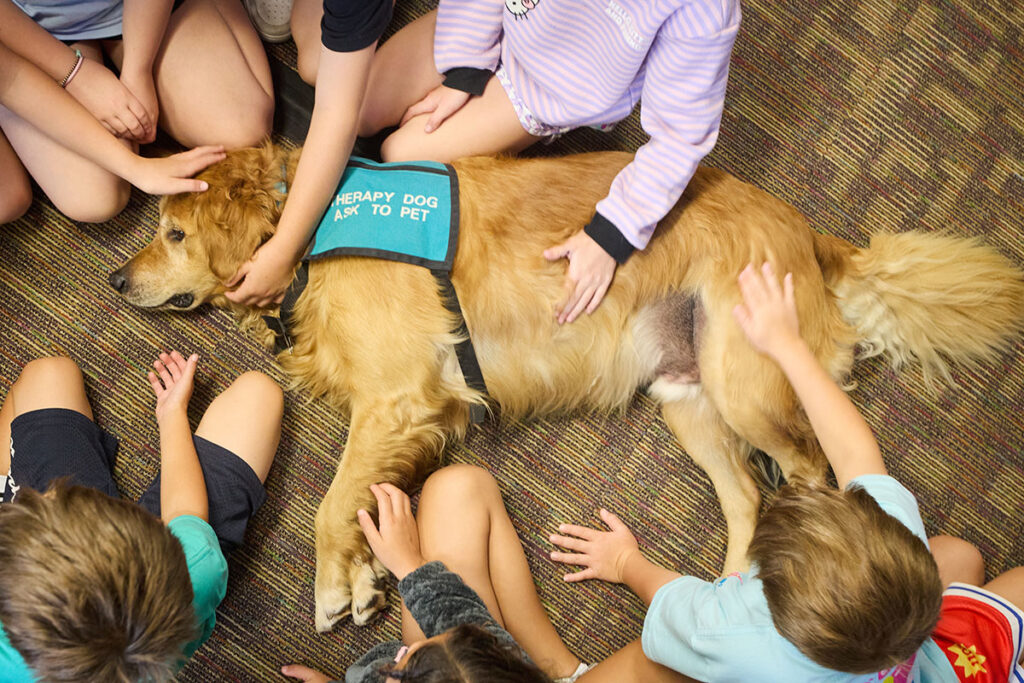
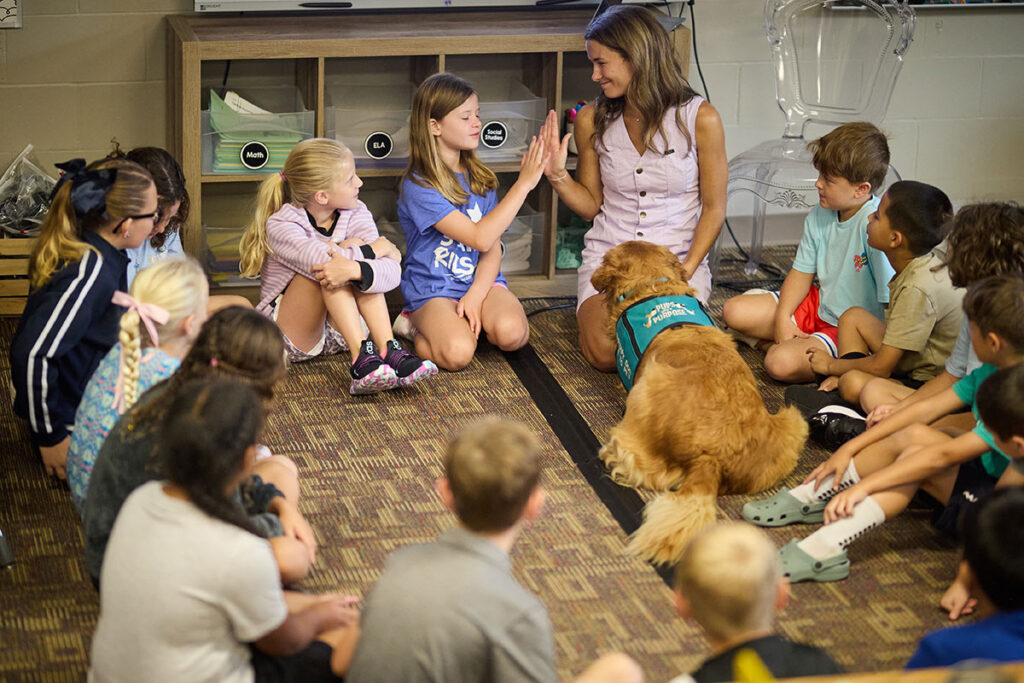
Other than that, Kirby can roam around the classroom for pets. When asked what effect Kirby’s presence has had on her students, Allen relayed there are many. “The students watch the volume of their voices, understanding that if they’re too loud, it may be hard on Kirby’s sensitive ears,” she said. “They keep the floor clean because he might eat something he shouldn’t, and when he walks away from someone, they have learned to just let him go because he’s ready to go talk to someone else. They learn to share attention and respect boundaries.”
Principal Woodrich added, “Our students are genuinely excited to be at school, and having a therapy dog has added another layer of joy, comfort and connection to their school experience. Students light up when they see Kirby, seek out time with him when they need a moment to reset and benefit from the calming presence he provides. It’s amazing to see how naturally he has become part of our school community and the positive impact he has had on both students and staff.”
While Kirby’s calming presence is easy to experience at Heritage, researchers* are finding measurable evidence behind that wagging tail. In one study, when students participated in dog-assisted sessions and relaxation sessions, they showed significantly lower stress-hormone levels over the school term, with particularly notable effects among children with special educational needs. The researchers concluded that structured dog-assisted activities may help moderate stress in schoolchildren.
Research on reading with dogs is promising, too, although scientists caution that the evidence is still developing. Reviews have found potential benefits in reading motivation, confidence, classroom behavior and the creation of a relaxed, nonjudgmental reading environment. A therapy dog is not a furry substitute for a teacher—but he may help a child feel comfortable enough to try.
Kirby’s influence extends well beyond one third-grade classroom. Kindergartners call his name when they see him. Fourth and fifth graders who knew him in earlier years stop to say hello. Once, Allen found nearly half a fourth-grade class gathered around him in the hallway during transition time. She sent their teacher a picture with the message: “Found your class.”
For students who start out initially afraid of Kirby, the relationship develops slowly. At first, these children back away whenever the large dog comes near, but over time, after watching classmates interact safely with him, the students grow comfortable with him.
“We have had parents reach out to ask if Kirby could help their children work through a fear of dogs,” added Woodrich “Therapy dogs in the classroom ‘teach’ calming strategies, or simply provide some extra comfort and reassurance. It has been wonderful to see families recognize the positive impact Kirby can have and embrace him as an important part of our school.”
School carries serious responsibilities. Children are learning to read, solve problems, meet expectations and navigate friendships—all while managing feelings that can sometimes seem very big. Kirby cannot teach multiplication or correct a spelling test. What he offers is simpler and, on certain days, just as important: a peaceful presence, a patient listening ear and a reminder that school can be joyful.
“Kirby has truly become a part of the Heritage family,” said Woodrich. “We are so grateful for the time, training and dedication Mrs. Allen has put into making this opportunity possible. Watching the relationships students have developed with Kirby has been incredibly rewarding, and I am excited to see how his role continues to grow within our school community.”
“When people see him, you can just tell that a little bit of joy comes into their hearts,” Allen says. “Kids and adults – we all need that.”
It’s something chief volunteer Kirby knows – and delivers on – very well.