How Nebraska’s Oldest State Fish Hatchery Became a Hidden Gem
Story by Rhett Uleman.
Along the winding trails of Gretna’s Schramm Park, hikers and visitors explore the wooded bluffs of the Platte River Valley—sharing the natural environment with the protected animals that call the valley their home. Within the park’s interactive indoor facilities, an assortment of over 60 different species can be found in aquatic wildlife exhibits, while interactive activities guide families through journeys of ecological education and historical discovery.
Schramm Park provides a good mix of indoor and outdoor activities. River access points for kayaks and canoes, hiking trails with varying degrees of difficulty, and children’s play areas provide opportunities to get active and exercise, while features like the trout feeding pond and interactive stream offer comforting sensory experiences.
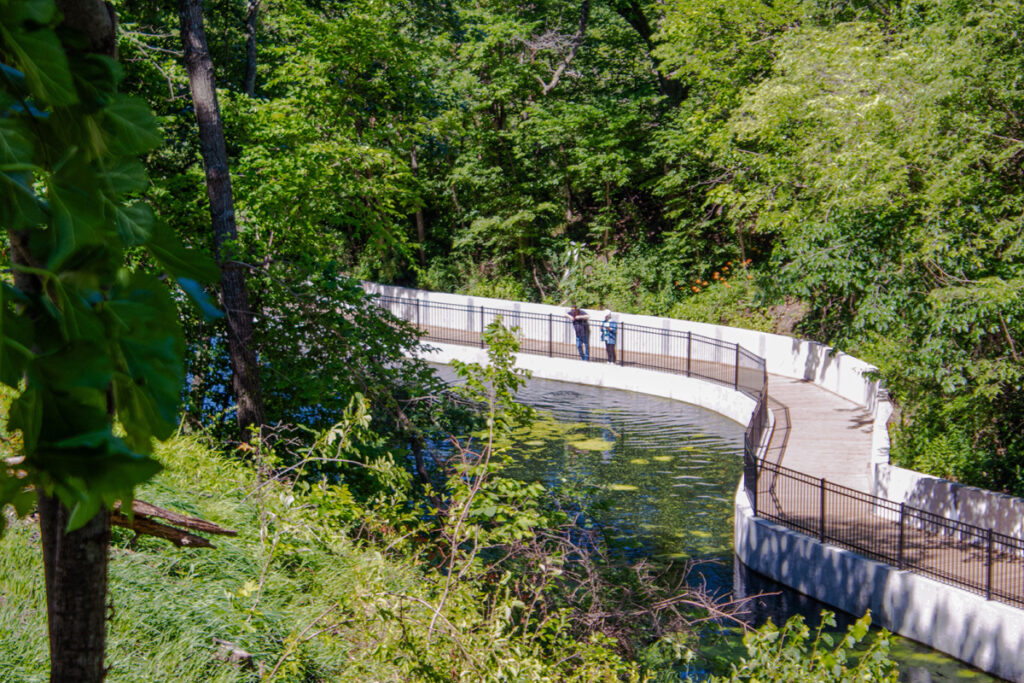
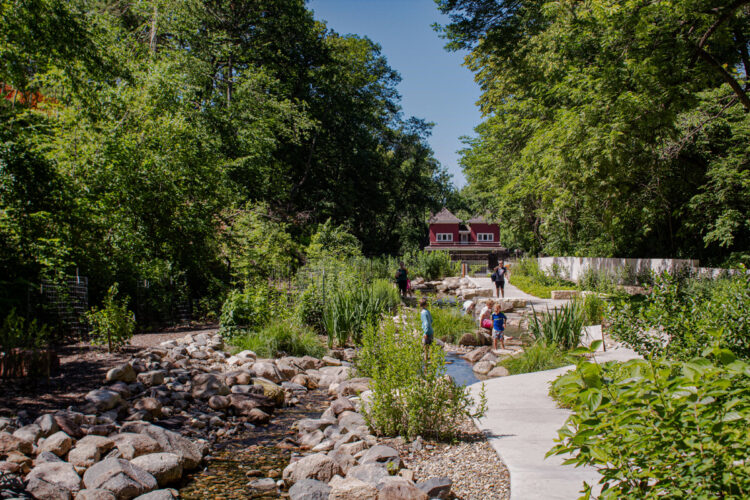
One of the park’s most recently renovated features is the interactive stream just east of the hatchery. In 2025, donations, as well as funding from the Nebraska Environmental Trust, allowed Schramm to convert some of their old canyon ponds into a new stream and construct accessible walkways for visitors to get to the natural spring. In natural spring water, Families are free to wade, play, and splash away in the stream. As the water flows downhill, it feeds into a deep trout pond where the fish are on full display all year round. Nearby, quarters can be exchanged for fish food at mounted dispensers, allowing for further interactivity with the aquatic wildlife.
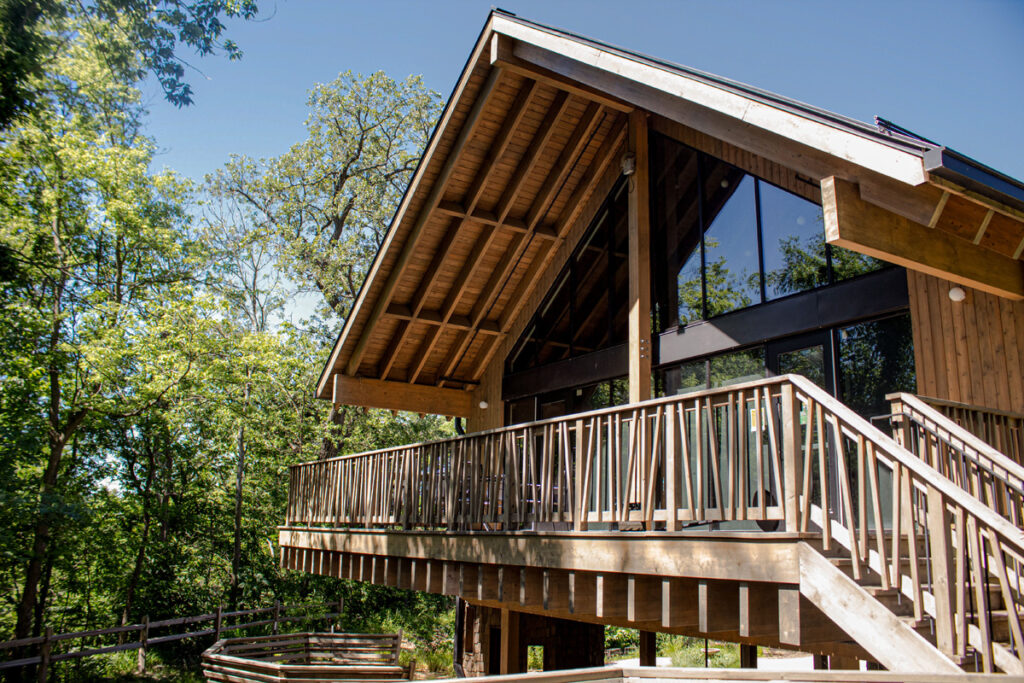
Peeking through the canopy of the trees overlooking the stream is another new addition, the Treehouse Classroom. Opened in May 2025, the treehouse provides a gathering area for visiting school children on field trips and educational visits. Complete with reading nooks, classroom seating, a projector setup, and large windows for viewing the environment below, the thoughtful space is designed to provide the best experience for the 10,000-plus visitors a year that the park hosts for field trip programs.
A hike on any one of Schramm Park’s three main trail loops can bring about encounters with whitetail deer, rabbits, turkeys, coyotes, foxes, and more. That’s not even mentioning the impressive variety of beautiful birds that populate and sing confidently throughout the park. Birdwatchers are bound to enjoy a feast for the eyes and ears by observing the sights and sounds of northern cardinals, bluejays, great blue herons, black-capped chickadees, red tailed hawks, and even bald eagles, to name a few.
The recent improvements and additions at Schramm reflect a broader focus on maximizing accessibility—reinforced by the belief that nature can and should be enjoyed by everybody.
“Here, we have a tagline: Time outdoors is time well spent,” Schramm Outdoor Education Specialist Kelly Ekue said. “Some people are very comfortable going on a 5-mile hike through the woods, while some people want to experience the outdoors but don’t have as much experience with it. I like that Schramm is very accessible, and it has both kinds of opportunities for people.”
Back in 1882, long before Schramm Park was developed into the attraction it is today, natural cold water springs found surfacing in the forested area caught the attention of the Board of Fish Commissioners—a state agency established by the Nebraska legislature that would later become the state Game and Parks Commission. The state purchased 54 acres of land that same year, acquiring the privately owned fish hatchery on-site and got to work raising fish to stock the waters of Nebraska.
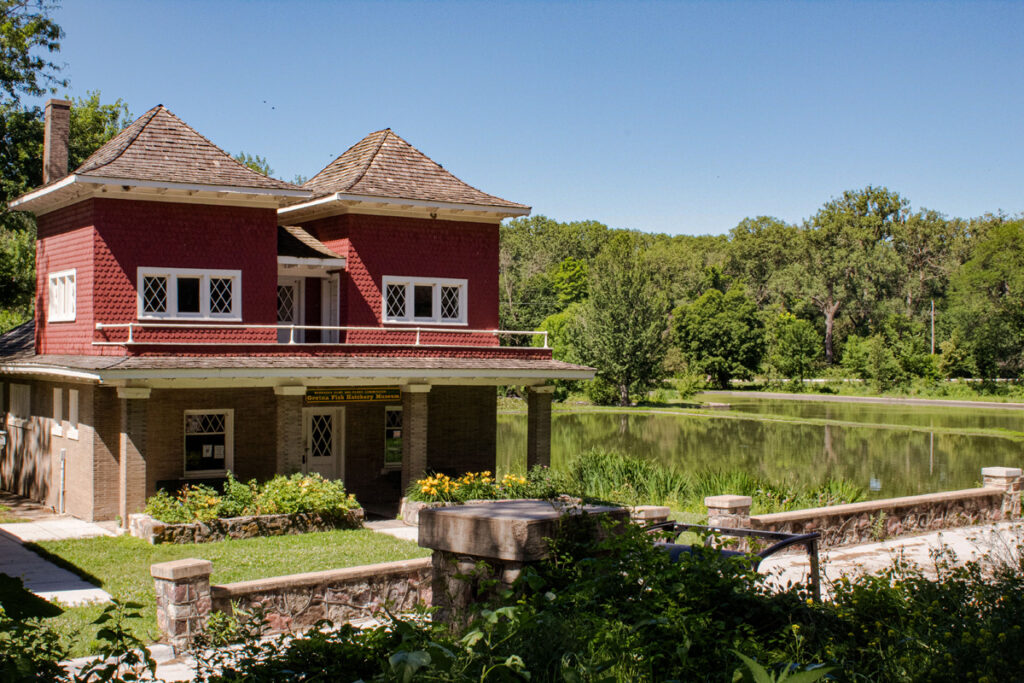
In 1914, a larger hatch house was built to allow for operational growth. This house would be used all the way up until the hatchery ceased production in the mid-1970s, and was then converted into an educational exhibit space. The house has been preserved as a historic building to this day, standing as a symbol of Nebraska’s ecological history. Just beside the house, some of the original canyon ponds are still present. Supplied by the cold, clean spring water on-site, these ponds are where thousands of fish were hatched and raised over the hatchery’s nearly 100 years of service.
The story of the century-old fish hatchery is an important piece of Schramm Park State Recreation Area’s history, but the park wouldn’t even exist today without the staggering contribution of UNL geology professor Eck Frank Schramm in the 1930s.
The passionate educator owned around 275 acres of land adjacent to the 54-acre plot owned by the state hatchery operation. He often brought his students to the land to study the area’s unique geological outcrop, but in 1937, he donated the entire tract of land to the state under the condition that it was to be used as a public park.
The development of the fish hatchery and the massive contribution from Professor Schramm were aligned—both being essential to the process of creating the foundation for what would become one of Nebraska’s greatest leisure hidden gems.